

Thoughts on Growing Older

LEAH FARISH|GUEST Today I had a lovely conversation with a Christian sister approaching 80—years, not mph. We had just finished Sharon Betters’ and Susan Hunt’s Aging with Grace, and that led us to our own talk on that topic. The book presents “steppingstones” of advice about getting older, and we came up with a few more. Widen your heart After a certain age, we cannot be young, but we can be youthful. The phrase “growing older” really offers a choice—between growing or just getting old. One of the things I notice about a youthful, ageless person is that she keeps growing in relationships. In existing relationships, she allows her friends to change; she lets herself be surprised; she expects her children to develop continually. She is open to new relationships, greeting newcomers at church or events, asking questions, revising first impressions with second and fifth and twentieth ones. One of the godliest, and ever-youthful, people I ever knew, my mother, was still asking the names—and birthdays and life stories-- of her ever-changing roster of caregivers when she was in her late 80’s. We would call or visit to check on her only to hear of the woes or triumphs of the third-grade child of her physical therapist. Her heart remained wide open to people all her life. Paul admonishes us; “You are restricted in your own affections…[W]iden your hearts.” (1 Cor. 6:12-13). It has become fashionable for some of us to nestle into our identity as introverts, but if we want to stay youthful, we will continue to pursue love...

Thoughts on Growing Older2023-03-24T17:48:33+00:00

Why Go to Bible Study

COURTNEY DOCTOR|CONTRIBUTOR I went to my first Bible study because I was lonely. I was in my early twenties with two small children at home and was desperate to meet other women and make new friends. The offer for free child-care only sweetened the deal and I signed up, eager for a few hours away from children and hungry for adult conversation. I did not go to this study because I had a burning desire to know God or his Word. However, while I did meet new friends and benefitted from a few hours away from the demands of small children, ultimately, I met God. And I have continued to attend Bible studies ever since. If you attend a weekly Bible study of some kind—in your church, neighborhood, or community—I want to ask you why? Like me in my twenties, perhaps you attend Bible study to make friends or enjoy child-care. The reasons that compel us to walk in the door will vary from person to person and from season to season. But the bigger question I want us to consider is, Why do we go to Bible study at all? It’s an important question because the answer shapes our expectations. What should we expect to be the result of going to Bible study? I’d like to propose that, while there are a myriad of good things that happen in and through Bible study—we deepen friendships, grow in our knowledge of God’s Word, invest in the lives of those around us—one of the ultimate things that happens is transformation. If you are a Christian, God is at work in your life transforming you. He is changing you into a woman who is better able to discern his will (Rom. 12:2). He is changing you so that you will be better equipped to join him on his mission to seek and save the lost. He is transforming you so that you will be more consumed with his kingdom than with your own, with his glory than with yours. And he is changing you to be increasingly more like Jesus in every way (Rom. 8:29). One of the most remarkable things about this extra-ordinary transformation is that it happens in very ordinary ways. And “going to Bible study” is one of the ordinary means God uses to do his extraordinary work. But this transformation does not just happen automatically—it requires your participation. Two ways you can actively participate with God in your transformation is by doing your homework and by showing up to discuss it with others. DO THE HOMEWORK A lot of women I talk with think of the homework provided in their Bible study as optional or something they will be better able to prioritize in a different stage of life. But time in God’s Word is vital at every stage of life! And a good Bible study will provide you with the structure and opportunity to spend that time productively. Most Bible study homework will ask you to read a passage of Scripture, answer questions about the passage, and consider how you are to respond to what you’ve read. The actual moments you use to go through these steps can feel so ordinary. Some of you do your study early in the morning while you’re still in your pajamas. Others study over lunch while sitting at your desk. Some of you try to finish it while you’re waiting in the carpool line. Very average moments for the most part. But, as we move through the homework of our study—reading, answering questions, reflecting, and thinking about how we are to respond—God is at work! Paul wrote in 2 Timothy 3:16 that, “all Scripture is breathed out by God and profitable for teaching, for reproof, for correction, and for training in righteousness.” This list is not exhaustive. As you read God’s Word, he, by his Spirit, is instructing you, teaching you, convicting you, encouraging you, rebuking you, feeding you, calling you, reminding you, humbling you, lifting you, comforting you, and loving you...

Why Go to Bible Study2023-03-24T18:17:35+00:00

God the Patient Gardener

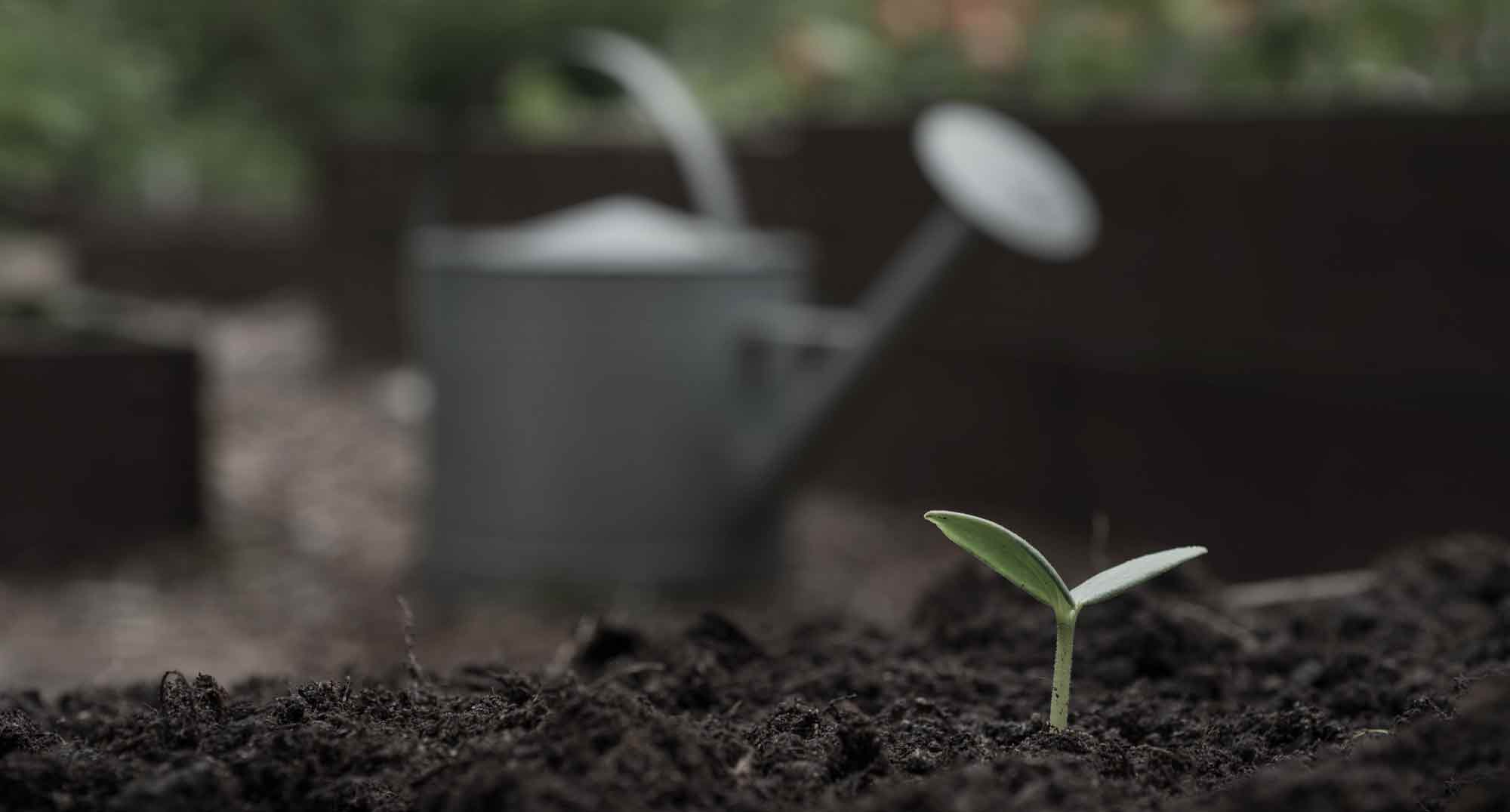
Every spring I have ambitious plans for creating a beautiful haven in my back yard. I pour over magazines, dreaming of lush plants, tranquil water features, and sheer beauty spilling from every bed. I put on my gardening gloves and head out, ready to conquer the curse of thorns and thistles and bring beauty and order to my corner of creation. I usually last about 4 hours before I give up. Gardening is hard! This year we spent all of our time and gardening budget on removing poison ivy and hauling in a truckload of rich soil. None of this produced the magazine worthy garden of my dreams. Yet all of it was incredibly necessary. Gardening takes time, hard work, and patience. It requires me to commit to the long haul, to get my hands dirty, and to wear myself out investing in things no one else will see so that beauty can spring forth from a ground that is cursed. I struggle to live in the tension that exists between toil and fruition. Digging in a Desolate Land I am not alone in this struggle. In some of Israel’s hardest seasons, when their lives probably felt like a pile of dirt and poison ivy, God made his people a promise. He spoke of a day when, “their life shall be like a watered garden, and they shall languish no more” (Jer. 31:12). To his people living in exile, who lived with uncertainty and unrest, God proclaimed, “This land that was desolate has become like the garden of Eden…I have rebuilt the ruined places and replanted that which is desolate” (Ez. 36:35-36). God comforted his children in tumultuous times by reminding them that he is a gardener...

God the Patient Gardener2022-05-05T00:09:46+00:00
Go to Top