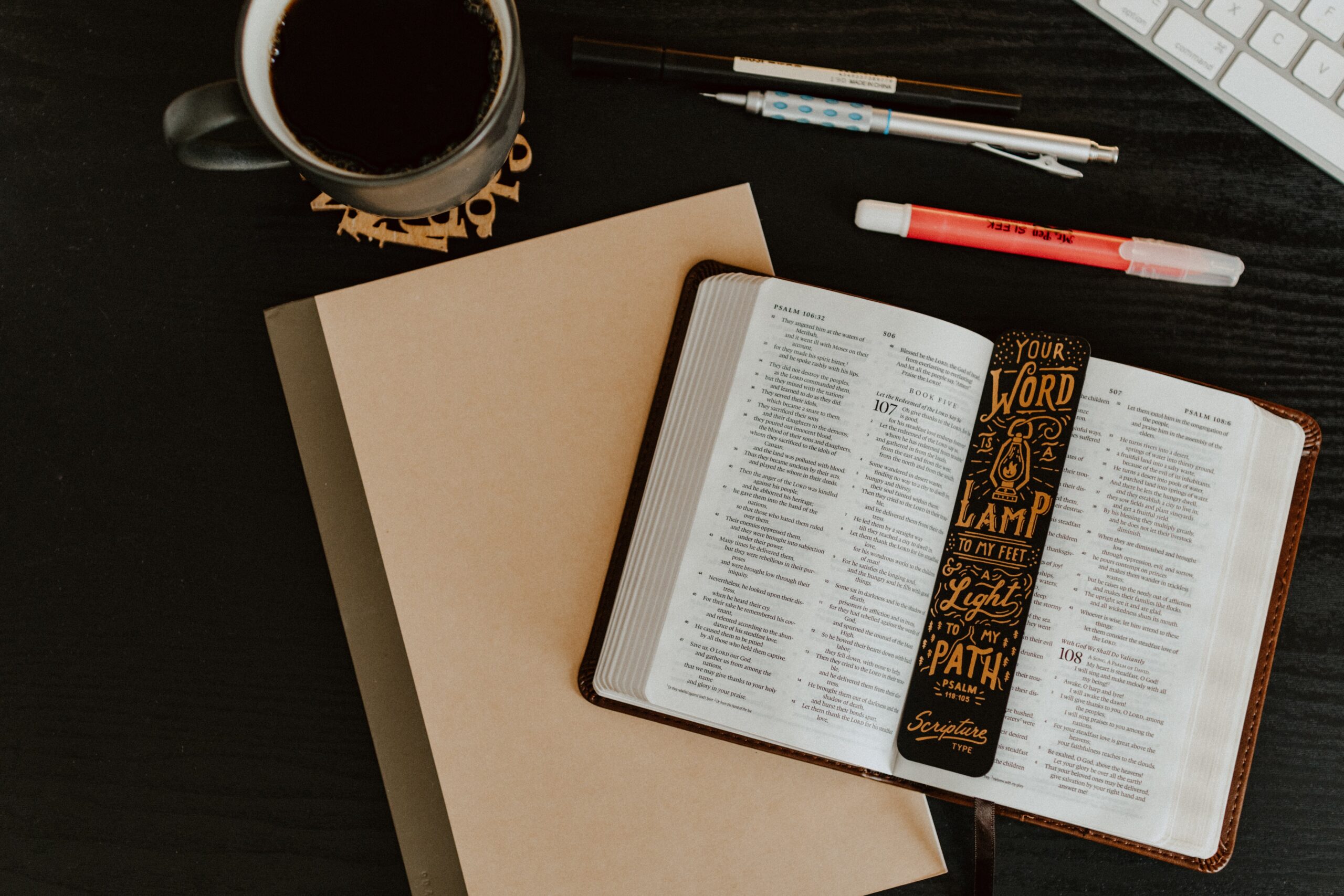

Windshields, Rearview Mirrors, and a Sunroof in 2026

KAREN HODGE | CONTRIBUTOR Navigating a Costco parking lot a week before Christmas will make you a prayerful person. We eagerly scan the windshield for the perfect parking spot near the door while checking our rearview mirror to make sure we do not hit an innocent woman with a cart full of toilet paper. As we circle a parking row one more time, we may be tempted to give up and go home without ever praying at all. As a follower of Christ, there is a value in looking backwards, forward, and upward to gain perspective. The reality is, we often get stuck with a singular view. The New Year provides the perfect crossroads to examine all three viewpoints. We can glance in the rearview mirror with gratitude and thanksgiving for God’s protection and provision. These blessings fuel our faith to believe God will continue in His Fatherly care. As we step into a new year, we can gaze through the windshield with hopeful anticipation mixed with hazy uncertainty. Forward momentum requires walking by faith and not by sight, a kind of Christ-confidence. Looking backward and forward quickly leads us to recognize the gift of our finite limitations. We take no credit for where we have been and need His grace to move forward. This gap compels us to look up. (Bonus blessings if you have a sunroof or convertible!) We feel our need of God, lift our eyes and heart, and pray like Jehoshaphat, “We do not know what to do, but our eyes are on you” (2 Chron. 20:12)....


Windshields, Rearview Mirrors, and a Sunroof in 20262026-01-05T16:56:29+00:00

On Resolutions and the Work of the Spirit

JAMYE DOERFLER | CONTRIBUTOR Around New Year’s Day, there are two camps of people: those who make resolutions and those who don’t. According to a study on Forbes, most people feel “pressured” to make a New Year’s resolution, with women (64%) feeling more pressured than men (60%). Making resolutions is far from a new phenomenon; we have at least one example of a famous Christian who was doing so before the founding of our country—Jonathan Edwards, Congregational revivalist preacher and theologian. Edwards’ resolutions weren’t tied to a new year. Instead, he kept an ongoing list of ways he wanted to grow in self-control, charity, worship, and other topics. There were 70 in total. Here a few: Resolved, never to do anything, which I should be afraid to do, if it were the last hour of my life. Resolved, to study the Scriptures so steadily, constantly and frequently, as that I may find, and plainly perceive myself to grow in the knowledge of the same....

On Resolutions and the Work of the Spirit2026-01-12T13:09:31+00:00

Happy New Year!

CHRISTINA FOX | EDITOR Happy New Year to you and yours from your friends at enCourage! "The steadfast love of the Lord never ceases; his mercies never come to an end; they are new every morning; great is your faithfulness" (Lam. 3:22-23).

Happy New Year!2025-12-16T21:15:05+00:00

Why I’m Reading the Bible (Again) This Year

JENILYN SWETT | GUEST How did you usher in the new year? Perhaps with a midnight toast, watching the Rose Bowl parade in your pajamas, or eating some dumplings or black eyed peas. In addition to some of those festive activities, I spent time journaling and did some deep-cleaning to help give the year a fresh start. I also started back at the beginning of the Bible reading plan I followed (with a few stops, starts, and detours) last year.  If you’ve gotten out of the habit of regular Bible reading – or if it’s a habit you’ve never developed, the new year can be a good time to start (or start again). The Bible is God’s Word, for us, so it is worth our time and attention. It’s worth treasuring because it’s how God makes himself known to us (Psalm 19). And just like any treasure is worth looking at over and over, the Bible is worth reading again. Here are a few reasons why I’m continuing the habit of regular Bible reading again this year, and why I hope you’ll consider doing so too. Because We’re Forgetful No matter how many times I’ve been told, no matter how many times I tell others, I still tend to forget some important things: God’s love for and delight in me, the ugly reality of my own sin, the significance of Jesus’s sacrifice, the hope we have in the resurrection. I need God’s Word to remind me. We have the Holy Spirit to help us remember what we’ve been taught, and one of the key ways he does that is through the living, active words of Scripture (John 14:26; Heb. 4:12). Because We Need Help Praying When I don’t have the words, when I’m not sure what to ask for, or when my heart is just struggling to pray, the words of Scripture are a great help....

Why I’m Reading the Bible (Again) This Year2024-12-26T19:37:56+00:00

Setting Goals with the End in Sight

How did your day begin? If it is anything like mine, it’s filled with good intentions. But just as the day’s momentum begins to build, it’s already 2:30 PM. Soon, the sound of the garage door opening vibrates throughout the home. My daughter’s high-pitched voice greets our golden doodle, and I’m having to answer, “What’s for dinner?” Our good intentions will be just that if it’s not followed up by action. Some time ago, I came across a short video in which author Malcolm Gladwell said, “… knowing my ending makes the beginning super easy … totally clear what I have to do and totally clear what I shouldn’t do.” Gladwell was referring to the process of writing and yet, the principle is transferable to moments when I struggle to account for the six hours between the first sip of freshly brewed coffee and the midday scurry of my dog, greeting the family member who has just walked through the mudroom. Or those days when my to-do list is marked by numerous lines striking through them, but feelings of dissatisfaction overshadow any sense of accomplishment. If I know my ending, then it’s clear what I have to do, and clear what I shouldn’t do. This means I engage each day with the bigger story in sight and have actionable goals that move me toward that end. To help bring clarity when setting goals, here are three questions to consider...

Setting Goals with the End in Sight2024-01-12T16:45:47+00:00

Using a Bible Reading Plan

BARBARANNE KELLY | CONTRIBUTOR Sitting in the glow of our Christmas tree, I turn in my Bible to the book of Job to read three chapters, then I read a psalm, and then I turn to the book of Revelation for one chapter. These are the familiar passages of Scripture with which I close each year: the greatness and majesty of our God, the joy of praising him, and his final victory in the culmination of his covenantal plan for his Bride, the Church. After spending the year reading through the Bible with all of humanity’s ups and downs—mostly downs—and the steadfast love and faithfulness of the Lord on display throughout, my heart overflows. The first week of January I’ll turn back to the opening chapters of Genesis and begin again. As idyllic as that may sound, I assure you that the discipline to follow through with a Bible reading plan does not come easily for me. January is often my best month. But as responsibilities with family and ministry mount, and the occasional vacation or unexpected life-event happen, it’s easy for the reading to fall off schedule. That’s often the case, isn’t it? Time in God’s Word is so easily neglected, pushed out by the urgencies of the moments of our days, and especially when we need it most! Why Read the Bible? I used to think that those Christians who read their entire Bible through in a year must be super-saints. I expected pastors to do that sort of reading as it’s their job to know the Scriptures inside-out. But for normal believers like myself, I figured that kind of immersion in Scripture was an unreasonable expectation and out of reach. The Lord has held me fast for many decades since I thought this way, and whether it’s from wisdom or experience or a bit of both, I’ve learned that super-saints are few and far between. Normal, quietly faithful, saints-without-capes, however, fill the pews in our churches and humbly pursue the disciplines of grace as they walk with the Lord. And one of those disciplines of grace is time spent daily in God’s Word. Reading through the Bible in a year (or so) is an attainable goal. There are many resources to help, some of which I’ll link to at the end of this article. But why should you set such a goal for yourself? I’ll allow the Apostle Paul to answer: . . . from childhood you have been acquainted with the sacred writings, which are able to make you wise for salvation through faith in Christ Jesus. All Scripture is breathed out by God and profitable for teaching, for reproof, for correction, and for training in righteousness, that the man of God may be complete, equipped for every good work. (2 Tim. 3:15–17)...

Using a Bible Reading Plan2024-01-28T01:31:47+00:00

Hanging up the Hustle Culture to Embrace Eternal Investment

KAREN HODGE | CONTRIBUTOR Pressure like a grip, grip, grip, and it won't let go, whoa. Pressure like a tick, tick, tick, 'til it's ready to blow, whoa-oh-oh. Give it to your sister and never wonder. If the same pressure would've pulled you under. Who am I if I can't fall or fail? I have a reputation for crying in my popcorn in movie theaters. Sometimes, I cry because of sentimentality, and other times it happens when the truth hits a bit too close to home. While watching the movie, Encanto, the scene where the older sister Luisa sings the lines from Surface Pressure, I cried the tears of a recovering older sister, workaholic, and perfectionist who has bowed to the idol of productivity for over 30 years. In the scene, she is carrying the load of her family, including the embodiment of her woe, on pack mules up a steep hill. Her song laments the insatiable drive to please others and the vacuum of the "not-enough-ness" of human limitations. Maybe you are not crying like me, but instead, you are almost giddy with the potential of productive days ahead in 2024 as you clutch your brand-new bullet journal. Ah, the possibilities seem endless! But whether it is the lines in our journal or the rings closing on our smart watch, we are always searching for ways to measure and account for how we spend our time. Time is an economic affair. Just take a listen to those around you.  "There are not enough hours in the day." "I am sick of wasting time."  "Let's kill some time." "I am living on borrowed time." "I wish I could turn back the hands of time." By now, optimism may be reduced to realism. We rush from here to there with little regard for rest. We live in a hustle culture— an environment that intensely focuses on productivity, ambition, and success at all costs. The idol of toxic productivity is a cruel taskmaster. If I see my value as being measured by how much I accomplish in each day, then doing will always trump being. Thinking biblically about productivity includes remembering my identity is rooted in the finished work of Jesus Christ on my behalf rather than in finding my worth in how many things I have checked off my to-do list. In this tension, we may tend towards two extremes...

Hanging up the Hustle Culture to Embrace Eternal Investment2024-01-02T17:15:32+00:00

Hallmark, the Gospel, and the New Year

KIM BARNES | CONTRIBUTOR I have a confession to make. I like Hallmark Movies. Now, perhaps you don’t see that as something to confess, but I’m someone who used to mercilessly mock Hallmark-type movies and those who liked them. I viewed such movies as silly and predictable and the folks who enjoyed those movies as shallow, undiscerning media consumers. I was wrong. Now, I’m not saying that Hallmark movies are high art, just that they have value that I previously did not appreciate. In case you’re unfamiliar, most Hallmark movies have a similar plot. In the first few minutes a woman experiencing some sort of disappointing life change or crisis meets or reconnects with a man who she initially finds unappealing. Circumstances cause the two to have to work together on some project or event. Miraculously they successfully complete the project—that would normally take months to complete—in a week or two. Sparks fly and romance is kindled. Despite obvious attraction, the couple experiences conflict and misunderstanding leading them to believe that they’re not meant to be together. But this belief is short-lived and the movie crescendos with the couple professing their love, sealed with a kiss. The Beauty of Simplicity Why do millions of people (mostly women) enjoy these predictable, unrealistic, formulaic movies? During a particularly stressful season in my life, I discovered Hallmark movies and found the predictability comforting. At first, I thought my enjoyment was nothing more than a little escape from reality. But what if it’s the opposite? What if the reason I was drawn to these movies is that they are supremely realistic? Perhaps the predictable plots and simplistic stories remind us of the beautiful simplicity of the Gospel story and point us to the reality of life with Christ? As lost sinners we look for meaning. Uncertainty fills our lives. When we are introduced to Jesus, we may think He’s not the answer we’re looking for. We may resist submitting to His Lordship. But He woos us, and we become smitten with Him. He does the seemingly impossible. He saves and changes a sinner. Along the way, sin interferes. We sometimes think there’s another way. We make choices that complicate our life on earth and our relationship with Jesus. Sometimes staying the course with Christ seems unimaginable. But in the end, we can be sure that we will be together. Everything will be made right, and we will enjoy an eternity in the presence of Christ. This is the kind of predictability we long for and it’s the kind of predictability we can count on as we embark on a new year. Exhaustion is what many of feel at the end of the year. The holiday season, though filled with joy and fun, is also tiring. For some of us, grief and sadness hover over the season. We may lack enthusiasm as we move into the new year. Hope may not be in the forefront. Believe it or not, I think Hallmark movies can help us here. Remembering the Faithfulness of God                                                                                                                                        A common theme in Hallmark movies is the main character re-connecting with his or her roots or uncovering an important story from the past. The connection to the past inspires and empowers the character to move forward. Like the comfort food that fills our holiday tables and reminds us of our gatherings in years past, the comfort-flicks, of Hallmark remind us to remember joyful times. Such remembering offers a taste of the comfort that comes from the true Comforter...

Hallmark, the Gospel, and the New Year2024-01-05T18:36:44+00:00

Eight Benefits of a Bible Reading Plan

SARAH IVILL|CONTRIBUTOR There is no other time of year that Bible reading plans are more recommended than the month of January. With the new year, we are encouraged to begin new routines that will bring new growth, especially spiritual growth. But oftentimes the focus is on the logistics of the plan. For example, you can choose a chronological plan, a New Testament plan, the Robert Murray M’Cheyne Bible plan, the 52 week Bible reading plan, or the 5 day Bible reading program, among several others. Plans are good because they ensure we read the whole counsel of God, not just a few parts here and there, which inevitably leads to skewed doctrine. But instead of focusing on the different kinds of plans, I want to focus on the overall benefits of a Bible reading plan. In other words, why bother to choose a plan at all? Let me suggest eight reasons. First, God’s Word “is perfect, reviving the soul” (Ps. 19:7a). We don’t have to look any further for refreshment as we walk in the wilderness of this world. Scripture is our sole sustenance. If we don’t daily revive our soul in Scripture, we will begin to wilt spiritually... 

Eight Benefits of a Bible Reading Plan2023-03-24T17:45:01+00:00

New Year, New Habits

KIM BARNES|GUEST Years ago, I followed bloggers who encouraged their readers to join “The 5 O’clock club.” The aspirations of the club were to rise early (5am) to start your day. They offered a lot of advice about how to establish this habit. I don’t remember much of the advice, but one thing has stayed with me. One blogger wrote about rising at 5am: “Expect to feel bad for about 15 minutes.” That was a revolutionary idea to me. Previously, I would try to wake up early and usually felt so awful that I would decide that my body just isn’t ready to be awake and I would go back to bed. But what if it was NORMAL to feel bad? If my expectation is to feel bad, then I can soldier on. And you know what I discovered? When I wake up early and feel awful, the feeling almost always passes in about 15 minutes. Changing my expectation of what waking up should be like enabled me to establish a new routine and encouraged me to persevere. Expect the Hard As we start a new year, many of us are looking at establishing new routines and habits. One of the greatest obstacles to new habits is wrong expectations. We expect to feel a certain way. We want to gain certain results. But when reality is incongruous with those expectations, we get discouraged. We give up. We imagine that since the habits and routines that we aspire to are good, it will feel good to do them. Maybe they won’t feel good right away, because change is hard, but we expect that eventually the new habit will get easy...

New Year, New Habits2023-03-24T17:45:09+00:00
Go to Top